
Trying on Capes
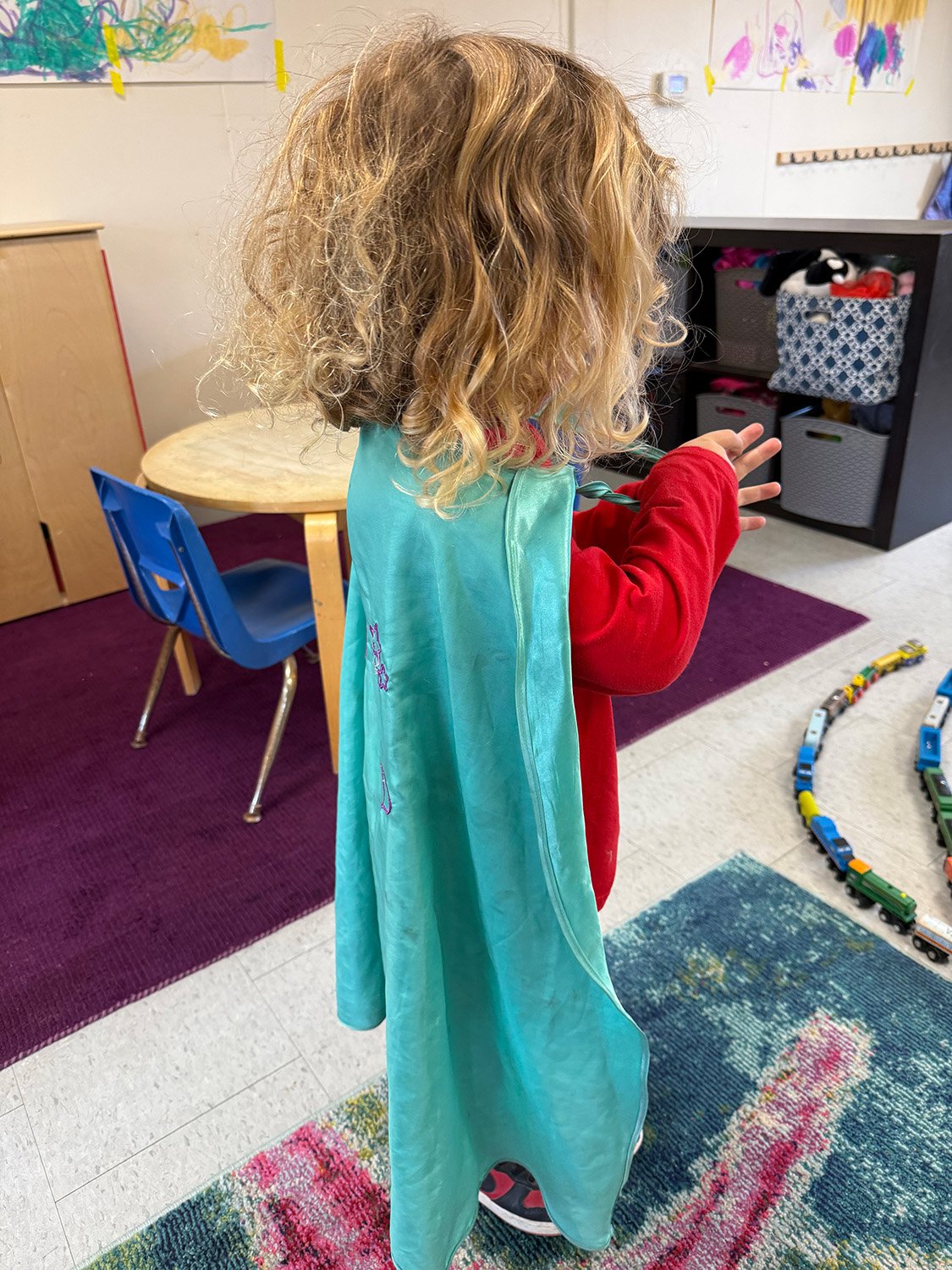
We have been working hard on putting on capes. Just two weeks ago, I remember a participating parent prompting one of our students to lay the cape he wanted to wear flat on the floor, and think about how it would get from there to around his neck. The student was not super thrilled with this idea, but took it in stride. He was looking at it the same way he looked at the other costumes he had figured out how to put on by himself—the dinosaur costume or the giraffe costumes. With each of those, he had similarly laid them out on the floor, put his feet through the legs, arms through the holes, and then pulled them up and across his back. With the cape, it was a little trickier because it had fewer parts.
He finally figured it out. He seems to prefer the light blue cape because it has a longer strap around the neck, which I suspect he finds easier to manage.
The great development is that this student has shifted his focus from donning his own cape to helping his friends. Last week, he was trying to help another student put on a cape. What he got right was that it needed to go around his friend's body. What he didn’t get right was where on the body it went; he kept trying to tie the cape around the other child's waist.
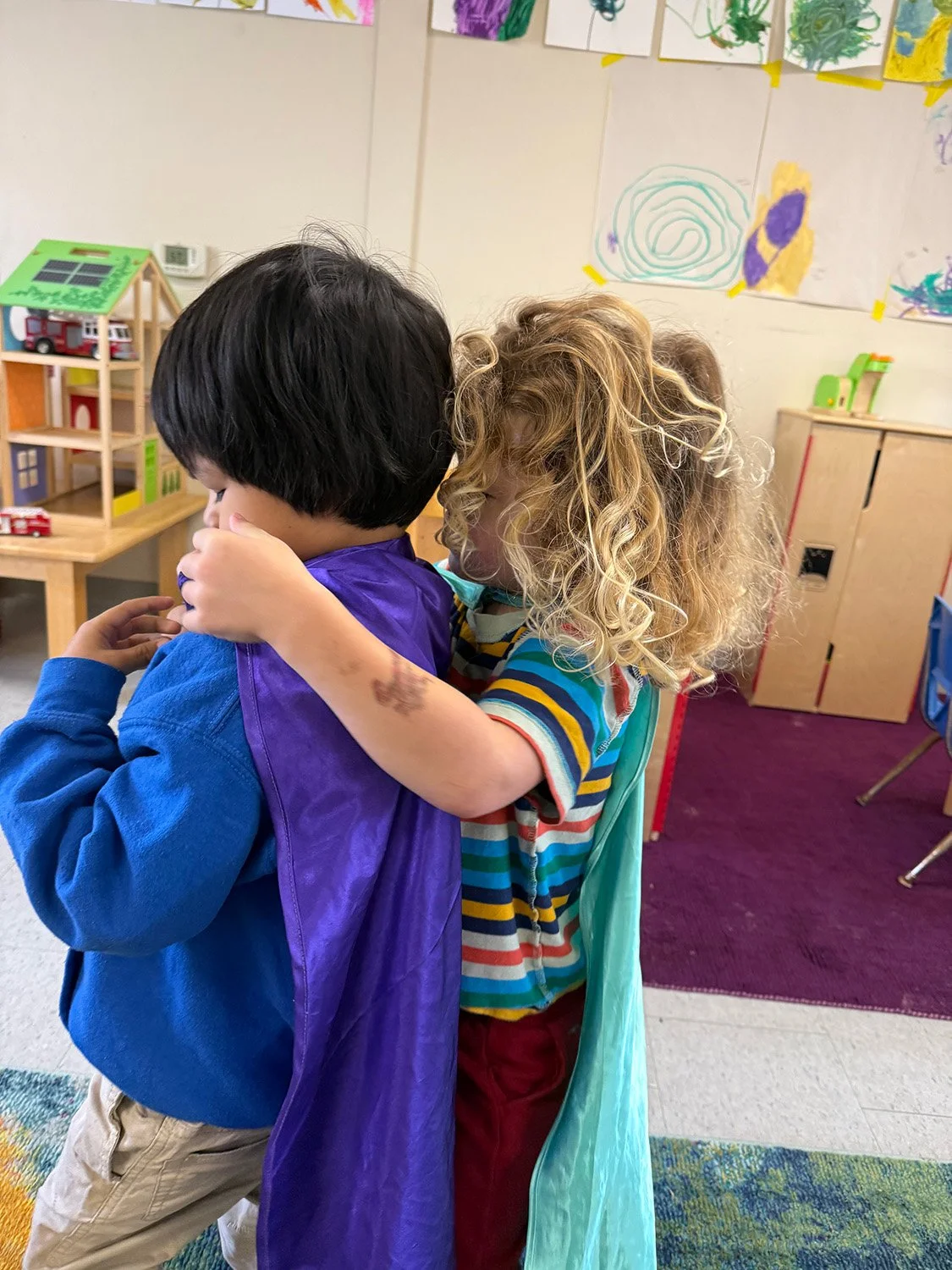
Today, he figured it out! He helped a third student get the purple cape securely around his neck.
As adults, we need to pause when a child needs help. First, the child might be noisily making progress on their own. Just because they are making noises (or complaining) doesn’t mean they need our intervention. Second, they can help each other. Peers are their best resource right after an adult. And finally, we are always available to help when it’s just been that kind of day or the task is truly beyond their capacity. When we step in too soon, we take away an opportunity for them to do it themselves, or to have a peer help them put on their superhero capes.