
Conflict As Social Opportunity
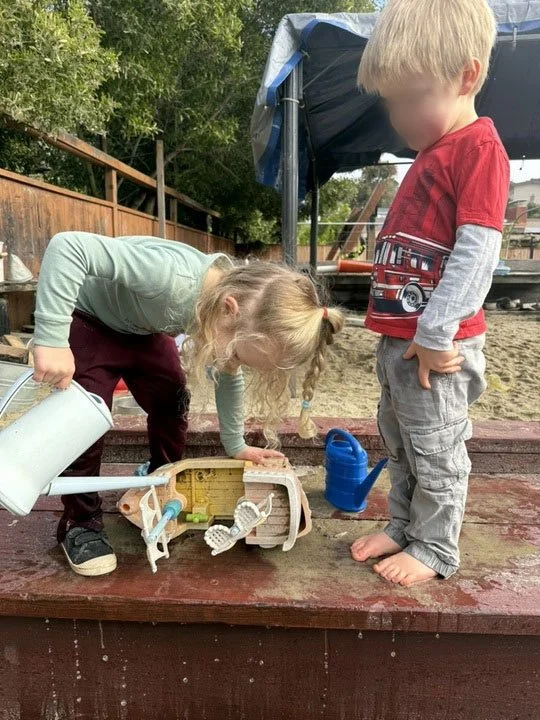
One student was playing solo with the sailing ship, working to figure out which way the wind was blowing to adjust the sails accordingly. Another student came by with a watering can and started watering the ship. The first student said, "No," and a teacher intervened as the other student was turning to leave with his watering can. The teacher asked him what he was wanting from his friend. "I wanted to clean his ship for him!"
"Well," the teacher said, "let's go ask him, because he didn't get to hear your idea. Maybe it will still be a no, but maybe it will be a yes."
So he went back to the student with the ship and asked if he could clean it. And then the first student said, "YES! That's why my ship was in the harbor—so it could get cleaned."
This was a moment where what seemed like an initial "conflict" was supported by adults as a chance to help the students actually voice their ideas about what they were wanting. Instead of hearing "No", walking off, and ending the interaction, at the end of the “moment”, they were playing together, collaborating on how best to clean the ship before it left the harbor.